
.jpg "Design nou personalizat cu nituri metalice de 12 mm pentru geantă de mână")
.jpg "Nituri laterale duble din alamă solidă cu cap plat subțire pentru piele")
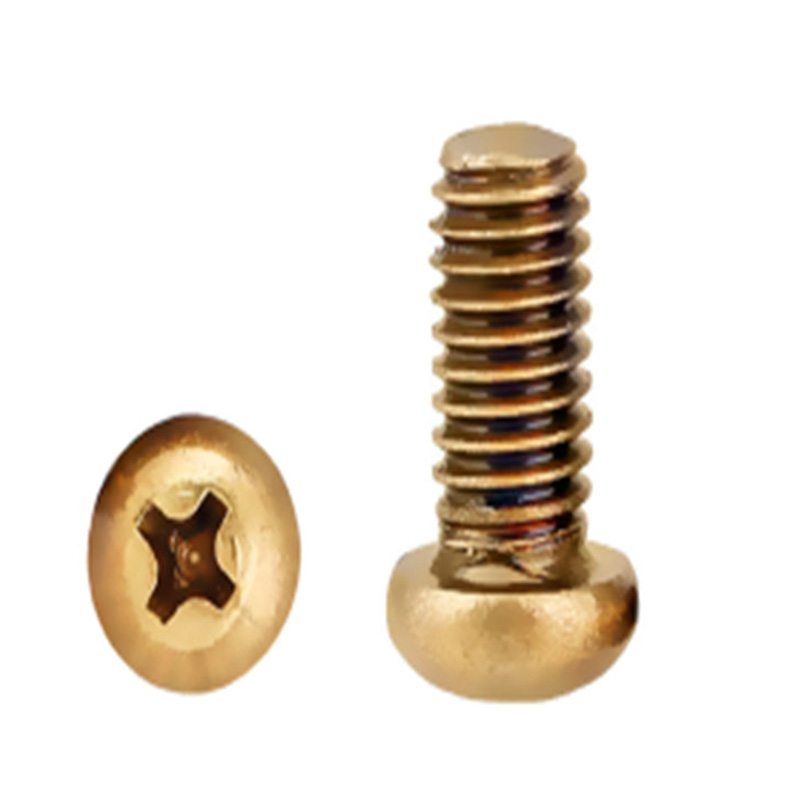
.jpg "DIN84 M4 din alamă șurub cu cap de brânză")
.jpg "Șurub torx din aliaj de titan cu cap buton")
.jpg "Șuruburi din titan personalizate de diferite forme și culori")
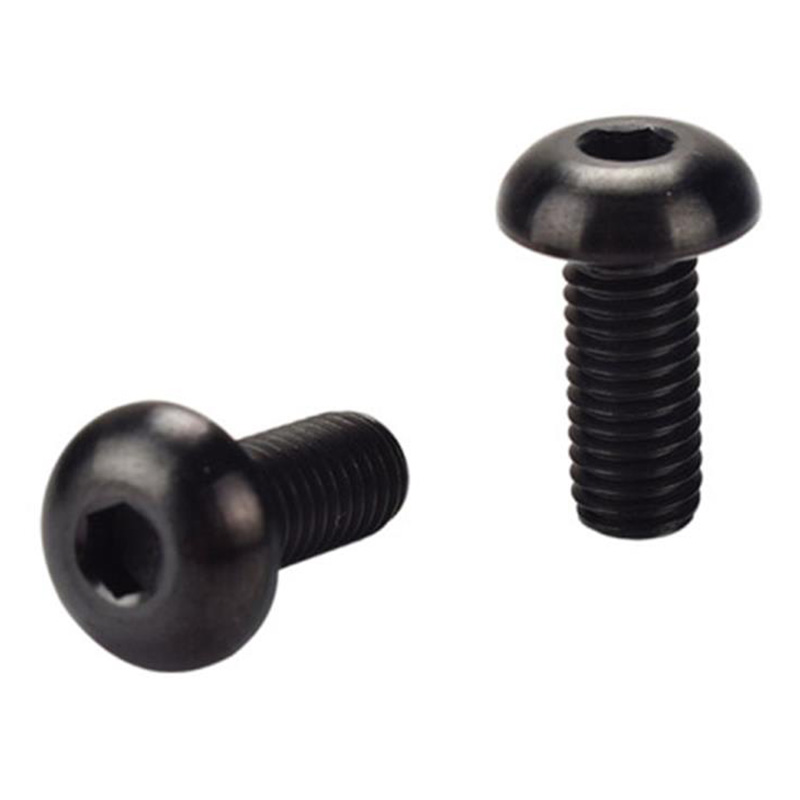
.jpg "Șurub din aliaj de titan torx cu cap buton de culoare personalizat")
.jpg "Șurub personalizat din aliaj de titan cu cap semirotund")
.jpg "Cap cupa hexagonal DIN912 cu șaibă șuruburi din titan pentru bicicletă")
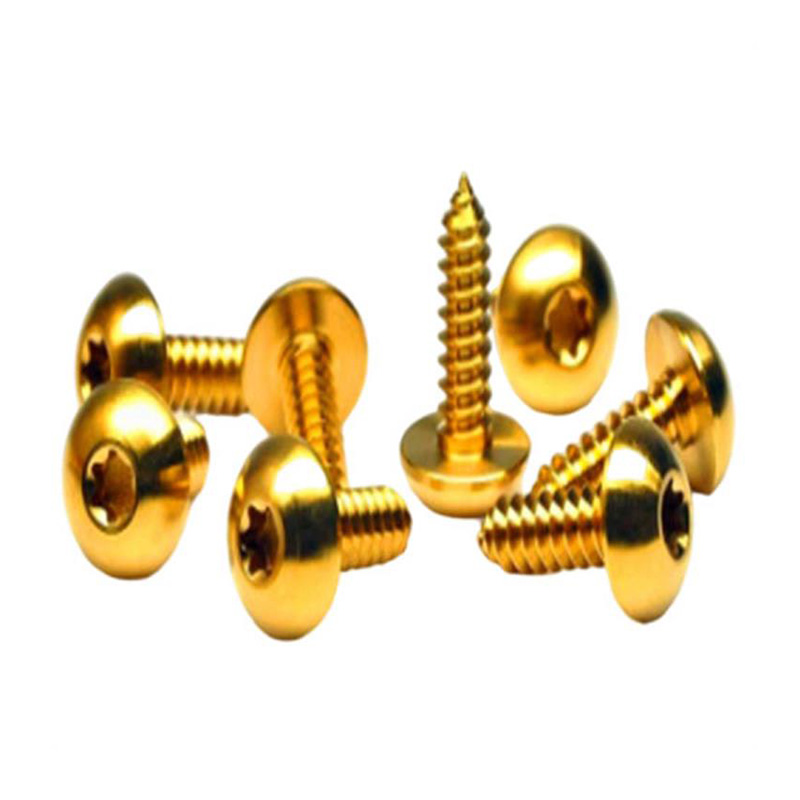
.jpg "Gr5 Titanium Ti6AL4V șuruburi șuruburi elemente de fixare pentru motociclete")
Schimbați un braț de control al suspensiei, construiți un cadru de remorcă sau strângeți o fla......
CITEȘTE MAI MULTSuzhou Anzhikou Hardware Technology Co., Ltd. este un producător care integrează dezvoltarea, producția și vânzarea șuruburilor de precizie. Producători de șuruburi de precizie și Furnizori de șuruburi de precizie non-standard în China. Fabrica existentă a companiei se întinde pe o suprafață de 2000 de metri pătrați și a introdus succesiv peste 200 de seturi de echipamente de precizie din Taiwan și Japonia, inclusiv un set complet de echipamente de producție pentru elemente de fixare, cum ar fi matrițe de recălire, sârmă de rulare a filetului, CNC și anti-slăbire etc., care pot produce șuruburi miniaturale cu diametrul exterior de 0,6 mm/lungime de 0,6 mm, iar capacitatea anuală de producție a pieselor standard și a șuruburilor non-standard este de până la 2000 de metri pătrați.
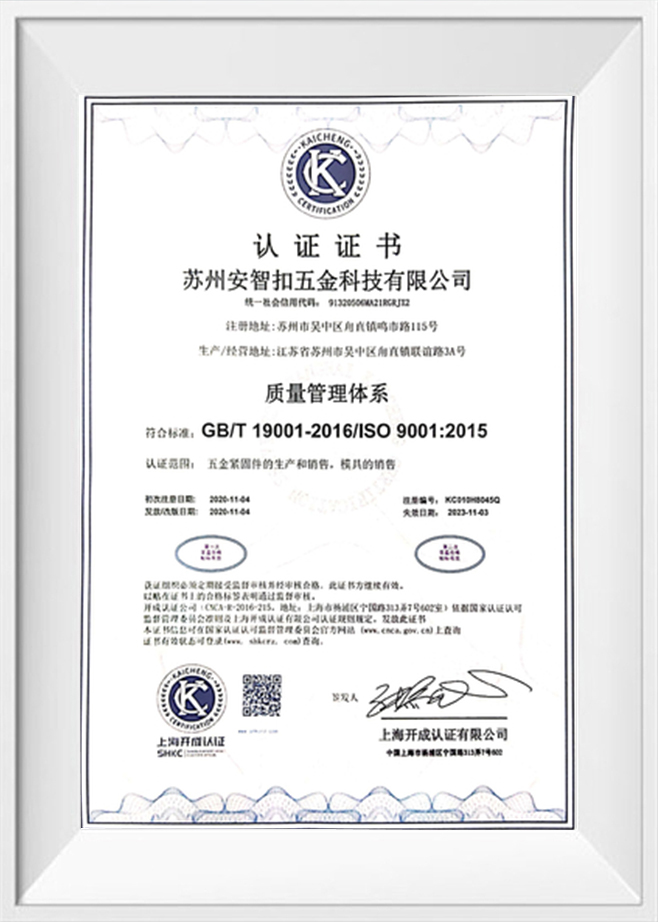
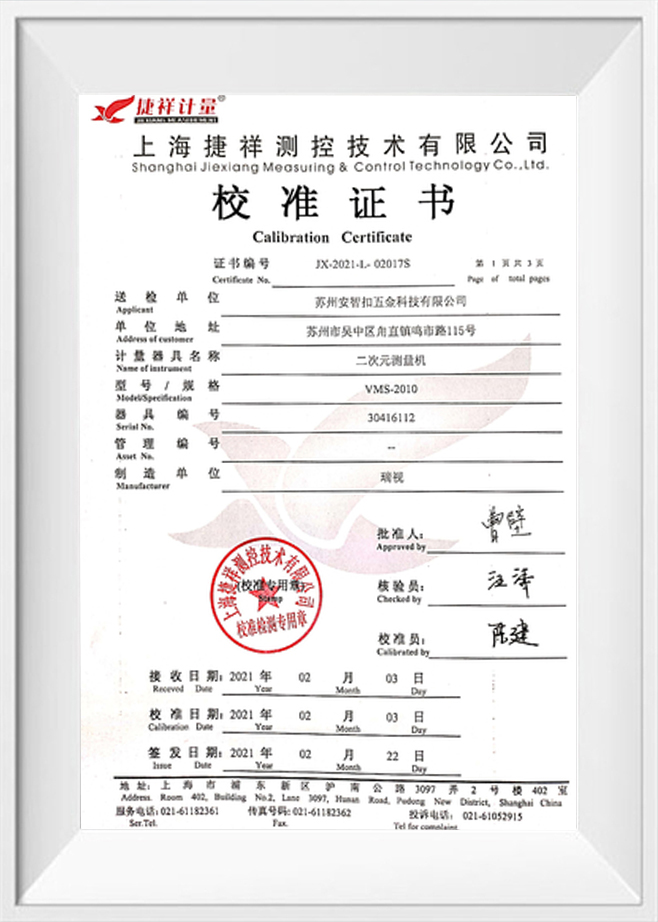
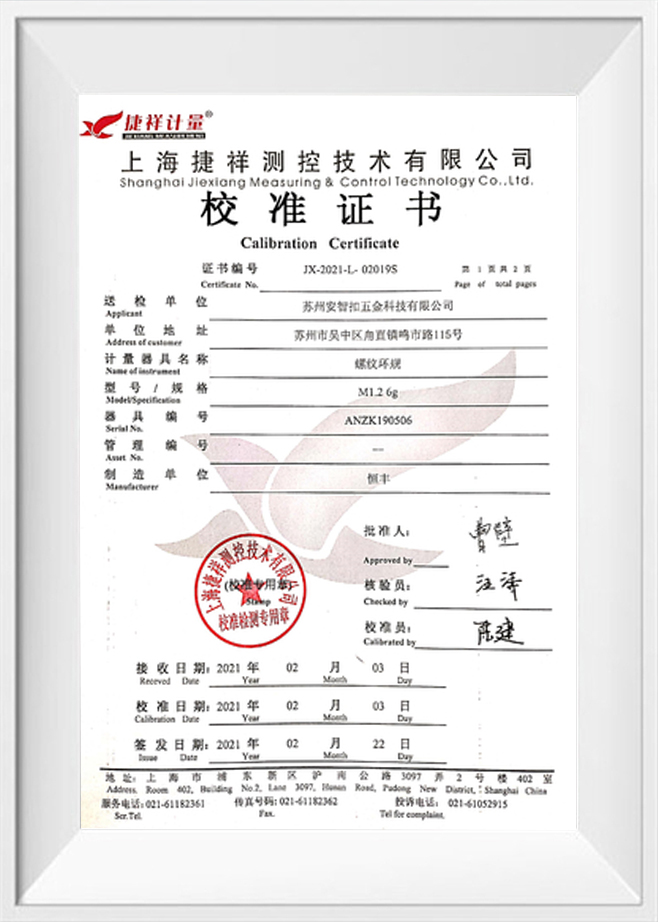
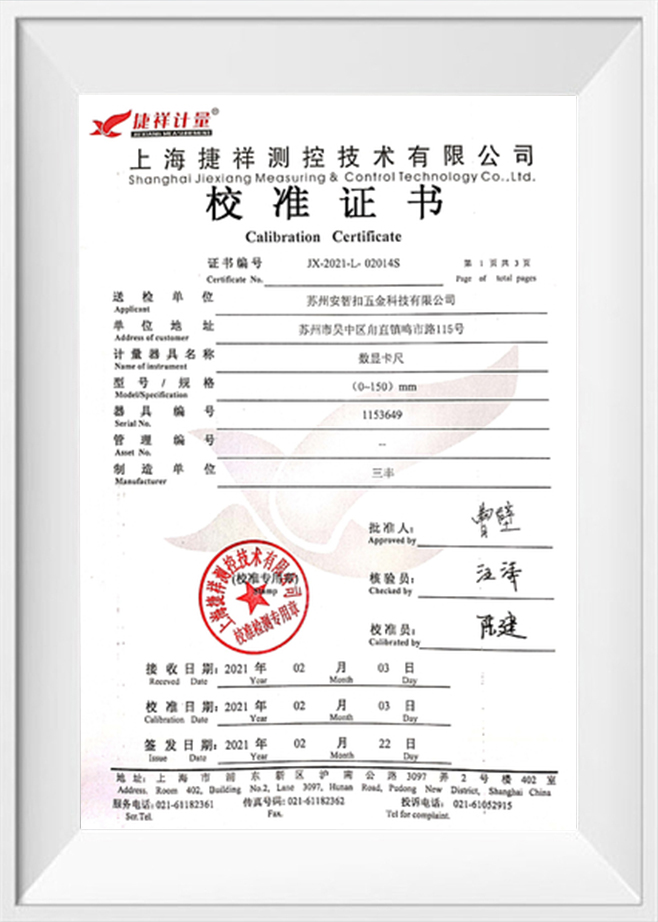
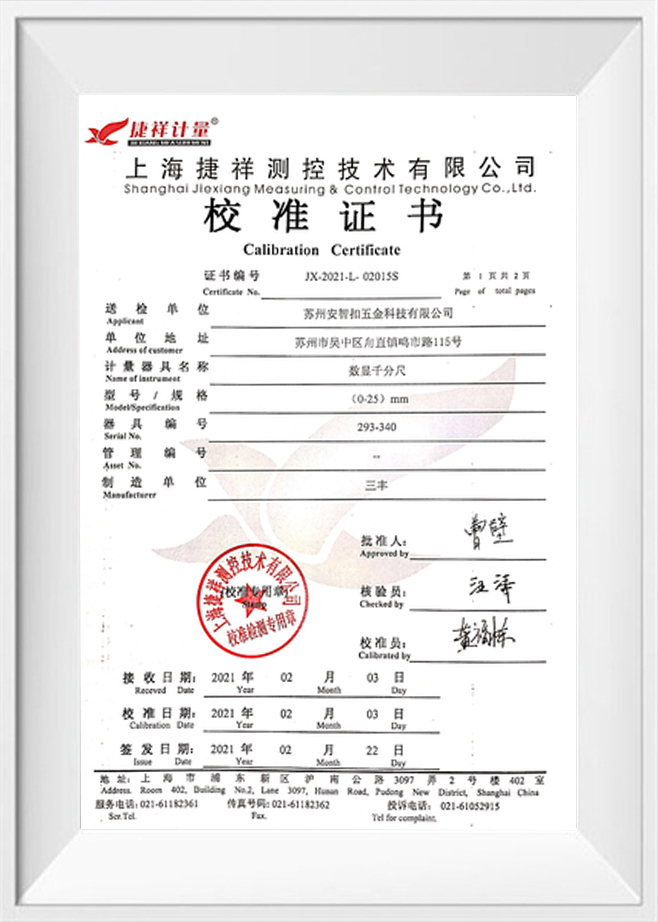
Anzhikou hardware dispune de o gamă completă de echipamente de testare și a obținut certificarea sistemului de calitate ISO9001:2015, având 20 de ani de experiență în producție și dezvoltare industrială, cu o echipă de ingineri și tehnicieni cu 20 de ani de experiență în industrie, formată din 10 persoane, care personalizează o varietate de șuruburi non-standard în funcție de cerințele clienților, Șuruburi de precizie personalizate, pentru a satisface diferite cerințe de calitate și cantitate ale clienților. Șuruburile de precizie Suzhou Anzhikou, cu o calitate excelentă a produselor, sunt exportate cu succes în 40 de țări și zone din întreaga lume.

Schimbați un braț de control al suspensiei, construiți un cadru de remorcă sau strângeți o fla......
CITEȘTE MAI MULTÎntr-un atelier de mașini aglomerat, ultimul lucru pe care doriți să-l descoperiți în timpul a......
CITEȘTE MAI MULTO plăcuță de înmatriculare dispare dintr-o dubă de livrare peste noapte. Un despărțitor de toa......
CITEȘTE MAI MULTUn tehnician de service care înșurubează un broșor de schimb pe un dulap de distribuție pe str......
CITEȘTE MAI MULTO plăcuță de înmatriculare este una dintre părțile cele mai ușor de furat ale unui vehicul: pa......
CITEȘTE MAI MULTAtunci când o echipă de produs caută șuruburi cu cap colorate personalizate, decizia de a util......
CITEȘTE MAI MULTIndustry knowledge
How to Define Tolerance Requirements for Non-standard Precision Screws
For Non-standard Precision Screws, tolerance definition should not stop at thread diameter alone. Buyers usually need to confirm the relationship between head height, thread length, shank diameter, drive depth, tip shape, and assembly clearance. A small deviation in one dimension may affect torque transfer, locking performance, or final product appearance.
A practical approach is to divide dimensions into functional and non-functional areas. Functional dimensions directly affect assembly, load, sealing, electrical contact, or positioning. Non-functional dimensions mainly affect appearance or handling. Functional dimensions should receive tighter control, while non-functional dimensions can often use more economical tolerances.
In our customization work, we often recommend confirming the assembly sample or mating part together with the screw drawing. This helps us judge whether a tolerance is truly necessary or whether it can be optimized for cost and production stability.
Material selection for Precision Screws should be based on actual service conditions rather than only price or appearance. Miniature screws, thin-head screws, and long slender screws may behave very differently even when made from the same material. Buyers should consider tensile strength, hardness, corrosion resistance, magnetic properties, and post-treatment compatibility.
| Material Type | Typical Advantage | Buyer Attention Point |
|---|---|---|
| Carbon Steel | Good strength and economical production | Usually needs plating or anti-rust treatment |
| Stainless Steel | Better corrosion resistance | Strength grade and anti-galling performance should be checked |
| Copper or Brass | Good conductivity and decorative appearance | Lower strength than steel materials |
| Alloy Steel | Suitable for higher strength requirements | Heat treatment control is important |
For very small screws, material stability is especially important because the screw may have limited thread engagement and a small drive area. The smaller the screw, the more important material consistency and process control become. With our experience in miniature screw production, including screws with an external diameter as small as 0.6 mm, we pay close attention to material behavior during forming, threading, and inspection.
Anti-loosening performance depends on vibration level, tightening torque, thread engagement length, material pairing, and whether the assembly will be serviced repeatedly. Thread adhesive is only one option. In some assemblies, mechanical structure, nylon patch, special thread shape, or precise torque control may be more suitable.
When buyers provide vibration conditions, tightening method, mating material, and service temperature, the anti-loosening solution can be selected more accurately. Our factory is equipped with anti-loosing processing capability, so we can help match the screw structure and locking method instead of treating them as separate decisions.
For customized screw orders, inspection should be planned before mass production. A good inspection plan defines what must be measured, how it is measured, and how often it is checked. This is especially important for non-standard screws because the drawing may include features that ordinary standard screw gauges cannot fully verify.
Inspection standards should be linked to the real assembly risk, not only to the drawing format. For example, a slight visual mark may be acceptable on a hidden internal screw, but unacceptable on a visible decorative screw. With ISO9001:2015 quality system certification and a complete range of testing equipment, we support buyers in setting practical inspection points for stable batch delivery.

DETALII DE CONTACT

Adresă:NU. 248-2 Changhongbei Road, orașul Luzhi, districtul Wu zhong, orașul Suzhou, provincia Jiangsu, China.
TEL:+86-13913588597
PRODUSE
Șuruburi cu model CD (periat satinat).
Șuruburi cu plasture din nailon (de blocare).
Șuruburi antifurt (securitate).
Șuruburi captive pentru panouri
Șuruburi impermeabile (autoetanșe).
Șuruburi din alamă și titan și aluminiu
Piuliță și șaibă și șurub cheie și arc
matrițe de laminare pentru matrițe și poanson
Șuruburi cu cap cu cap hexagonal
TERMINAL MOBIL



